
When young people teach, everyone benefits
What changes for children, youth, adults, seniors, and whole communities, with the numbers behind it.

When young people teach, everyone benefits
What changes for children, youth, adults, seniors, and whole communities, with the numbers behind it.
Key takeaways
- ChildrenStudents who start furthest behind on their report cards move up, and the change lasts.Learn more
- YouthMeaningful volunteering in their own community builds confidence, and future leaders.Learn more
- AdultsOne-on-one help, often in their own language, means adults learn up to 10× faster.Learn more
- SeniorsOur programs help seniors get out of isolation and become more connected to their communities.Learn more
- Communities$27 of social value for every $1 spent by YEP, and the help stays local.Learn more
Children
Fewer struggles on their report cards

One student’s story
In Grade 6, getting along with teachers was a real challenge for her. She was often sent out of class and spent a lot of time in the office. Often, she’d sit in the hallway on her own, watching magic videos on her phone.
YEP trained her and a group of her classmates in teaching skills. Then they performed magic tricks for seniors in their community, and showed them how to do the tricks themselves. A year later, she said:
“This program helped me let go of all my negative energy. I’ve been more positive instead of being negative.”
The challenge
For some children, school just doesn’t work. They fall behind, act out, and start to believe they have nothing to offer. Most programs are done to and for these students, not by them.
55%of the Grade 5 students we work with start out rated “Needs improvement” on their report cards.
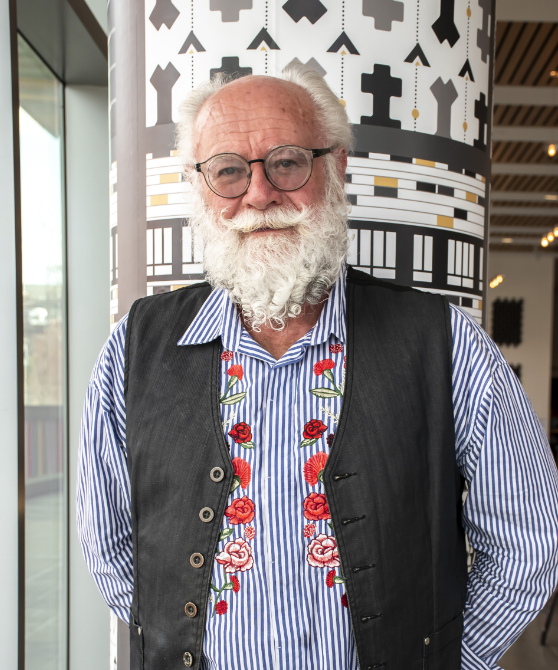
“There’s a bunch of kids for whom school does not work. The structure is all wrong for their needs and learning styles. YEP is hooking those kids who do not see themselves as fitting in at school.”
Why it works
- ✓Children in Grades 5 to 8 become the teachers, for adults and seniors in their own neighbourhood.
- ✓It’s a real leadership role, often their first.
- ✓Students who struggle in class get to show their strengths, and their teachers see them too.
- ✓Teaching builds patience, communication, and respect, skills that carry back into the classroom.
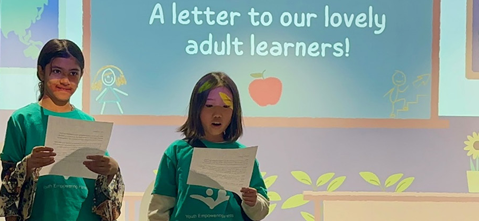
“We were shy and we were nervous, and we weren’t sure if we would succeed… it made us realize what we are capable of doing. Thanks to you, we now call ourselves teachers.”
What changes
Ontario report cards rate students’ learning skills, like responsibility and organization, as Excellent, Good, Satisfactory, or Needs improvement.
When they start with us, more than half of our students are rated “Needs improvement”. YEP helps them move up and out of that lowest level, so here, a smaller number is good news.
Students still rated “Needs improvement”
YEP students
55%
When they start at YEP (Grade 5)
32%
One year later
Other students at the same schools who are not in YEP
20%
Grade 5
17%
One year later
Study of Grade 5 to 8 students from six underserved schools.
The change lasts
Measured over four years, YEP students kept moving up out of “Needs improvement”, faster than students who weren’t in YEP.
Students still rated “Needs improvement”
YEP students
32%
Grade 6
19%
Grade 8
Other students at the same schools who are not in YEP
17%
Grade 6
12%
Grade 8
Study of Grade 5 to 8 students from six underserved schools.
Lasting impacts
It shows up in the classroom, too.
57%
fewer classroom removals
61%
more homework handed in
72%
rise in positive feelings toward their teachers
“I felt that this program really helped with their self-esteem. I really wanted them to have an opportunity to see themselves as having gifts and strengths, and this program allowed for that to flourish.”
Youth
More confident, more capable

In his own words
“It’s really hard to find meaningful volunteer opportunities in my own community. Usually they just ask me to put up flyers in buildings around the neighbourhood. I wish more organizations realized what young people can do. I’m good with tech: instead of putting up the flyers, I could have made them. I want to do something that really matters, and YEP lets me do that.”
The challenge
Too often, young people are seen as a problem to be fixed, not as part of the solution. Especially in the under-resourced communities where we work, they’re rarely trusted with real responsibility for the challenges around them.
93%of our youth tutors had never volunteered before joining YEP. For most, we’re their first experience of giving back.
Why it works
- ✓Meaningful volunteering, close to home: they help people in their own community, often their own neighbours and family.
- ✓They’re trusted with a real role: teaching an adult or a senior, one-on-one.
- ✓We train them first, and support them every step of the way.
- ✓They teach what they know and love, from computers to chess to painting.
- ✓Anyone can do it, whether they’re quiet or outgoing.
What changes
96%
felt a sense of meaningful accomplishment
92%
grew more confident in their abilities
For some youth, teaching comes naturally: they’ve been helping their own families for years. For others, going from helping at home to formally teaching someone feels daunting. Many are nervous at first, but with practice and support, they thrive.

“I am a student, so for me, being a teacher was like ‘Woah!’ I feel impressed with myself, because when I started out, I did not think I would be able to do this.”
Lasting impacts
For most, YEP is their first time volunteering. They leave caring more about their community, and wanting to do more.
When they joined
62%
valued volunteering
After YEP
94%
valued volunteering
Skills for life: youth who improved a lot in
- 96% Empathy and respect
- 95% Patience
- 90% Explaining things clearly
- 89% Problem solving and creativity
YEP Youth Competencies Survey, 750+ youth tutors.
Adults
Learning up to 10× faster

In her own words
“I took a computer course at the library with 15 other adults and one instructor. Most of us didn’t speak English, and we all spoke different languages. We also had different levels of computer skills: some people learned fast, and some learned a lot slower. One time I had a question, and I waited 20 minutes for the instructor to get to me, because he had to help so many other people. At YEP, I have my own tutor, and so does everyone else. Whoever needs it gets a tutor who speaks their language. It’s so much easier to understand, and so much easier to learn this way. The tutors at YEP may be young, but they really know what they’re talking about.”
The challenge
Many adults come to us after spending a long time trying to learn the skills they need every day, like English or using a computer, and struggling in traditional classes.
22%of adults drop out of government-funded language classes
Source: Government of Canada, Evaluation of the Language Instruction for Newcomers to Canada program (at least 22%)
It’s isolating, too.
43%of newcomers who have been in Canada less than 10 years report feeling lonely.
1 in 4newcomer women feel a strong sense of loneliness and isolation.
Sources: Canadian Social Connection Survey, 2023; Roots & Wings study, Publicis Media Canada
Why one-on-one works
- ✓They get the attention they need, without waiting.
- ✓They learn what they actually need, as quickly as possible.
- ✓Often in their own language, from a young person they trust.
Let’s put this into perspective
In a study, two groups of 12 adults learned the same lesson. In the traditional classroom, one instructor taught all 12. In the YEP classroom, each adult had their own youth tutor. Here’s how long it took for everyone to learn it:
Traditional classroom: 12 adults, one instructor
3 hoursYEP classroom: 12 adults, each with their own youth tutor
17 minutesClasses that fit around real life
Many adults, especially newcomers, are juggling so much: jobs, child care, and responsibilities at home. So it’s not only how fast they learn that matters, but when they can learn. Most government-funded classes run on weekdays, during the day, and for many adults that just doesn’t work.
YEP programs run outside traditional hours too: during the day, in the evenings, and on weekends, so adults can learn when it works for them.
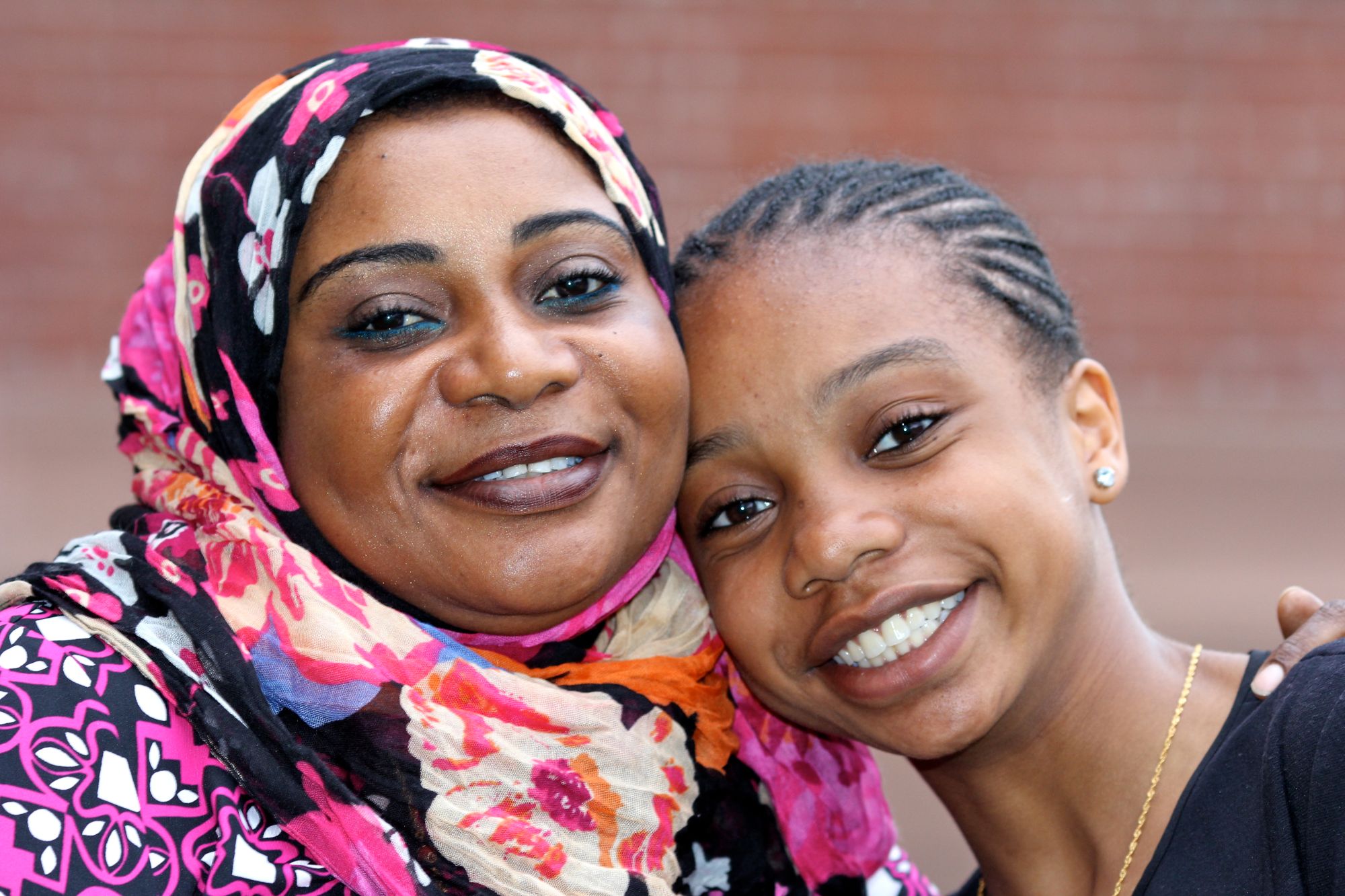
“Other classes were always during the day, when I had to look after my kids, and I couldn’t pay for daycare. With YEP, I can come in the evening or on the weekend. For people like me, that makes all the difference.”
Source: Government of Canada, Evaluation of the Language Instruction for Newcomers to Canada program (class schedules).
Lasting impacts
What adults learn at YEP lasts. It helps them become more independent, builds the connections that ease loneliness, helps newcomers settle into their communities, and improves their overall quality of life.
- 77%signed up for more education or community programsNew friends, new networks, and less isolation. For many newcomer adults, YEP is their first step toward settling into their new community.
- 30 minless help needed from their children or spouse each weekMore independence, and less pressure on their kids to translate.
- 98%learned a practical skill they now use regularly in daily lifeNot just in class: skills they keep using long after.
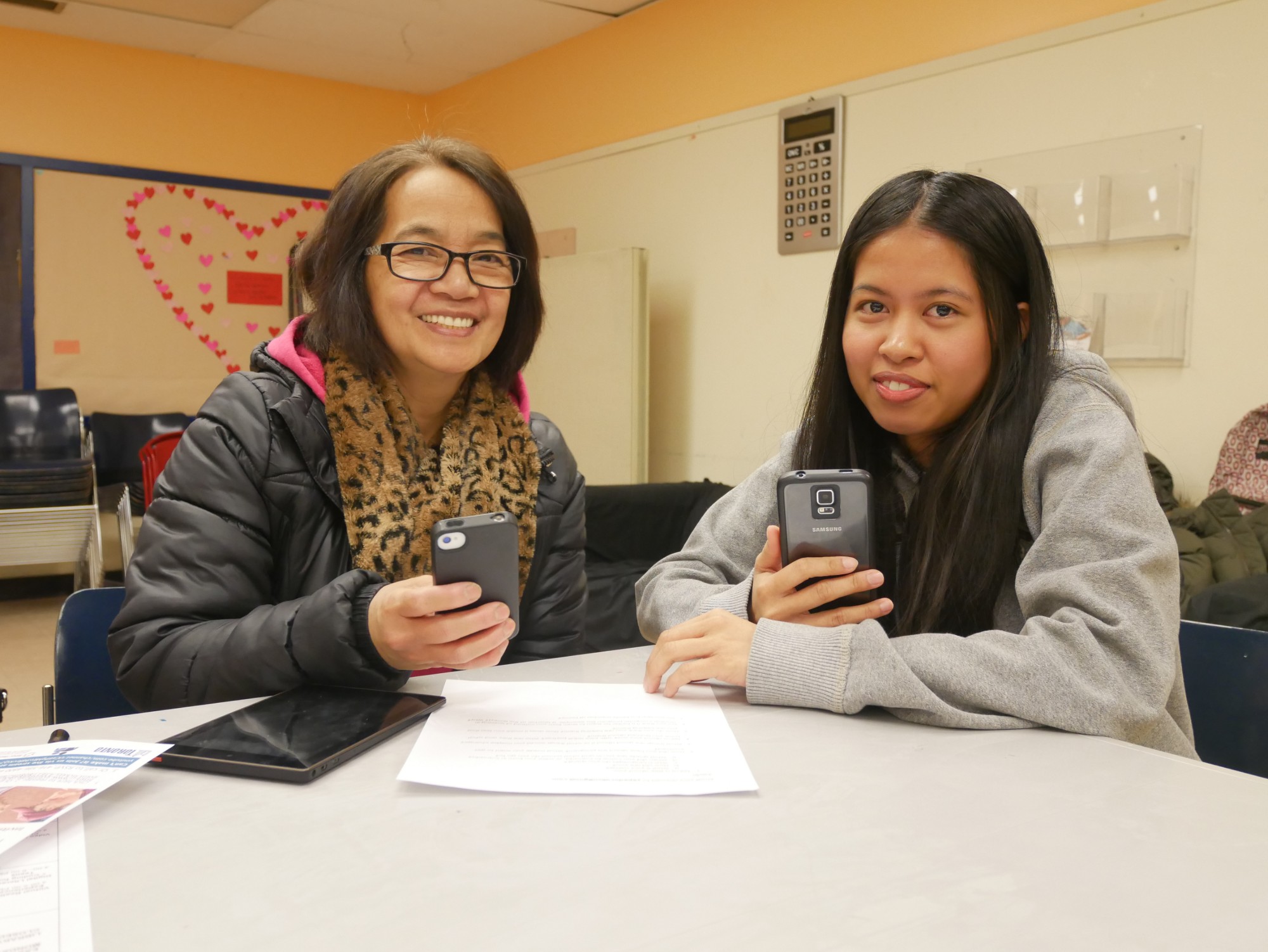
“I used to wait outside in the cold for the streetcar, sometimes for a long time, not knowing when it would come. My tutor showed me how to check the schedule with an app on my phone. I’m so happy. It makes my life so much easier. I use it every day to get to work.”
Seniors
Less isolated, and still learning
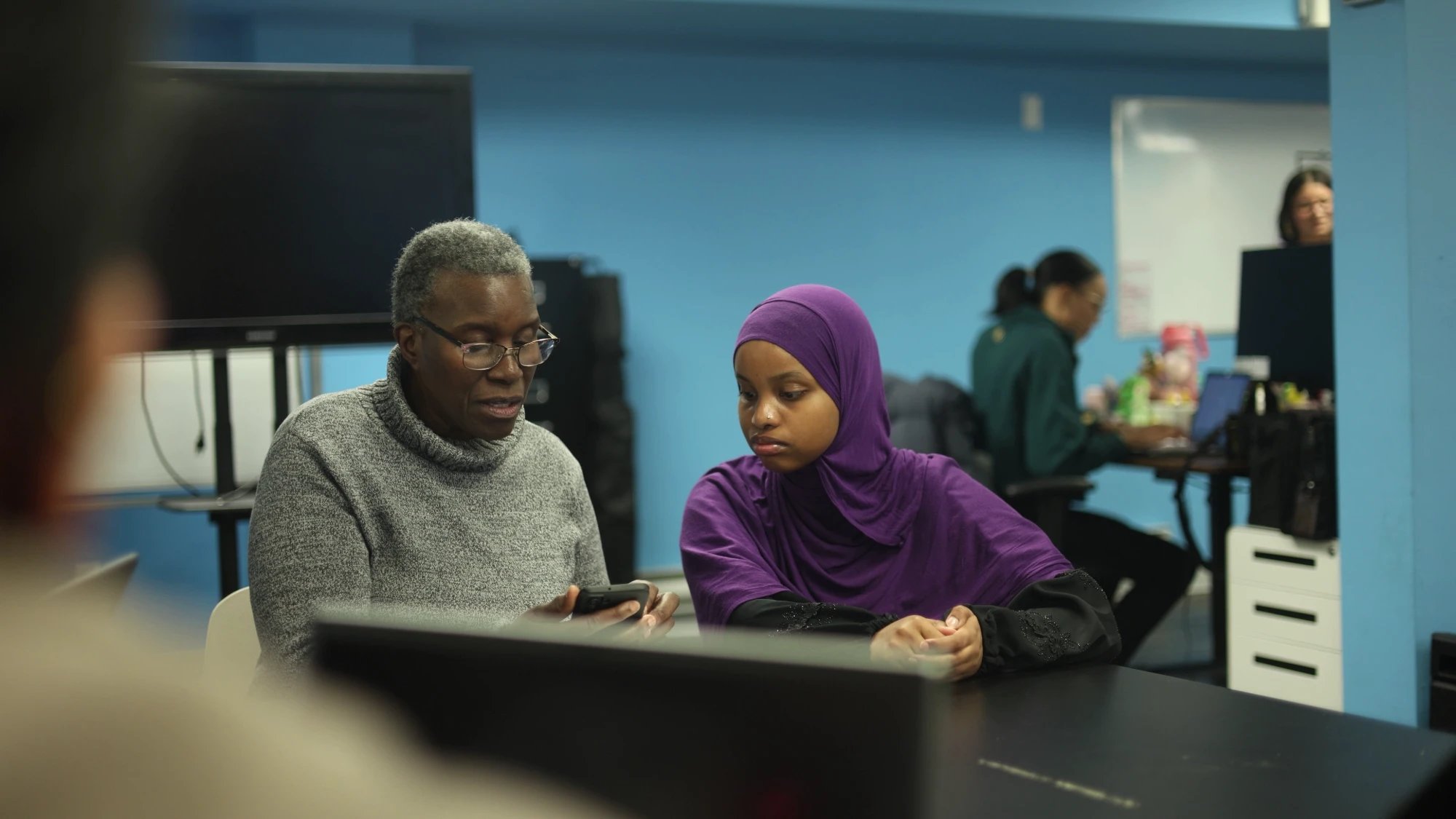
In her own words
“After my husband passed away, I stayed home most days. My children live in a different city, and I didn’t know how to use my phone to video call them. My tutor taught me how. She was so patient with me, because learning this is not easy for me. She explains it again and again until I understand.”
The challenge
Loneliness is a serious health risk, and it’s common among older newcomers. Language barriers and unfamiliar technology can cut them off from family, services, and their community.
2 in 3adults over 75, and more than half of those 65 to 74, aren’t confident using their devices or need help to set up and learn new ones.
As technology keeps advancing, that gap can grow even larger.
Source: Pew Research Center, 2021 (U.S. adults)
1 in 5Canadian seniors feel lonely.
- •Seniors whose first language isn’t English or French are significantly lonelier than Canadian-born seniors.
- •It doesn’t go away with time: immigrants who have lived here 20 years or more are still at higher risk. It’s not only newcomers.
Over time, loneliness takes a real toll: experts say being lonely for a long time is as harmful to your health as smoking 15 cigarettes a day.Source: National Seniors Council (Government of Canada)
Reaching those who need it most
61%of the seniors and adults who join YEP were socially isolated.
We reach the people who need it most.
Why it works
- ✓A weekly session to look forward to, with the same young person.
- ✓Patient, one-on-one help, at their own pace.
- ✓In their own language when they need it.
- ✓They learn what matters to them, like calling family or booking appointments.
- ✓Easy to take part: youth come to where seniors already are, like community centres, seniors’ buildings, and seniors’ agencies.
- 98%
would rather learn from a young person than in a traditional class
“It feels like I’m learning from my own grandchild.”
Lasting impacts
The biggest change is connection: seniors feel less alone, and more like themselves again.
When they joined
61%
felt socially isolated
After YEP
93%
felt less isolated and had better mental health
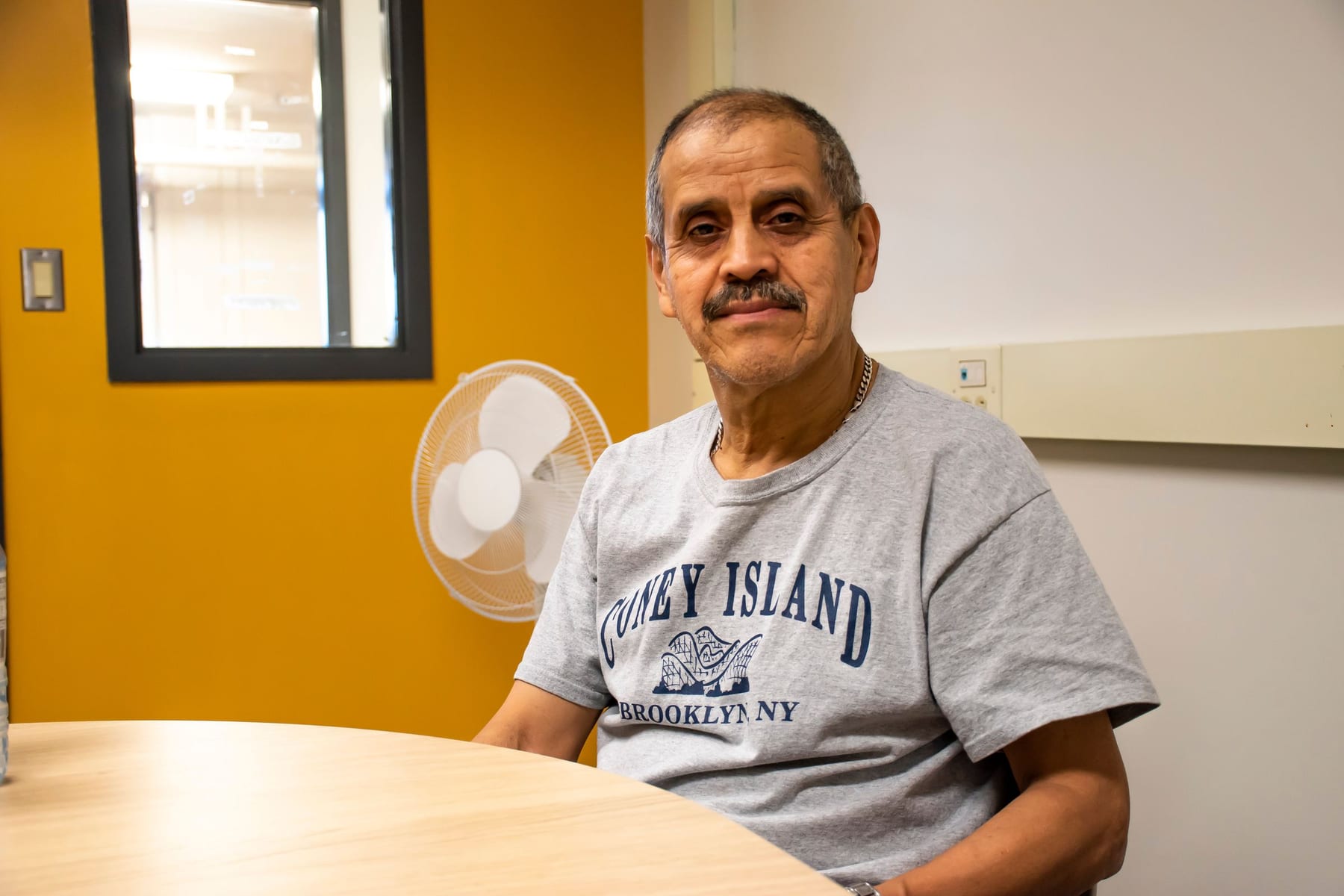
“I got to see my sister’s face after 30 years. I can’t describe how that felt.”
Communities
Help that stays in the community
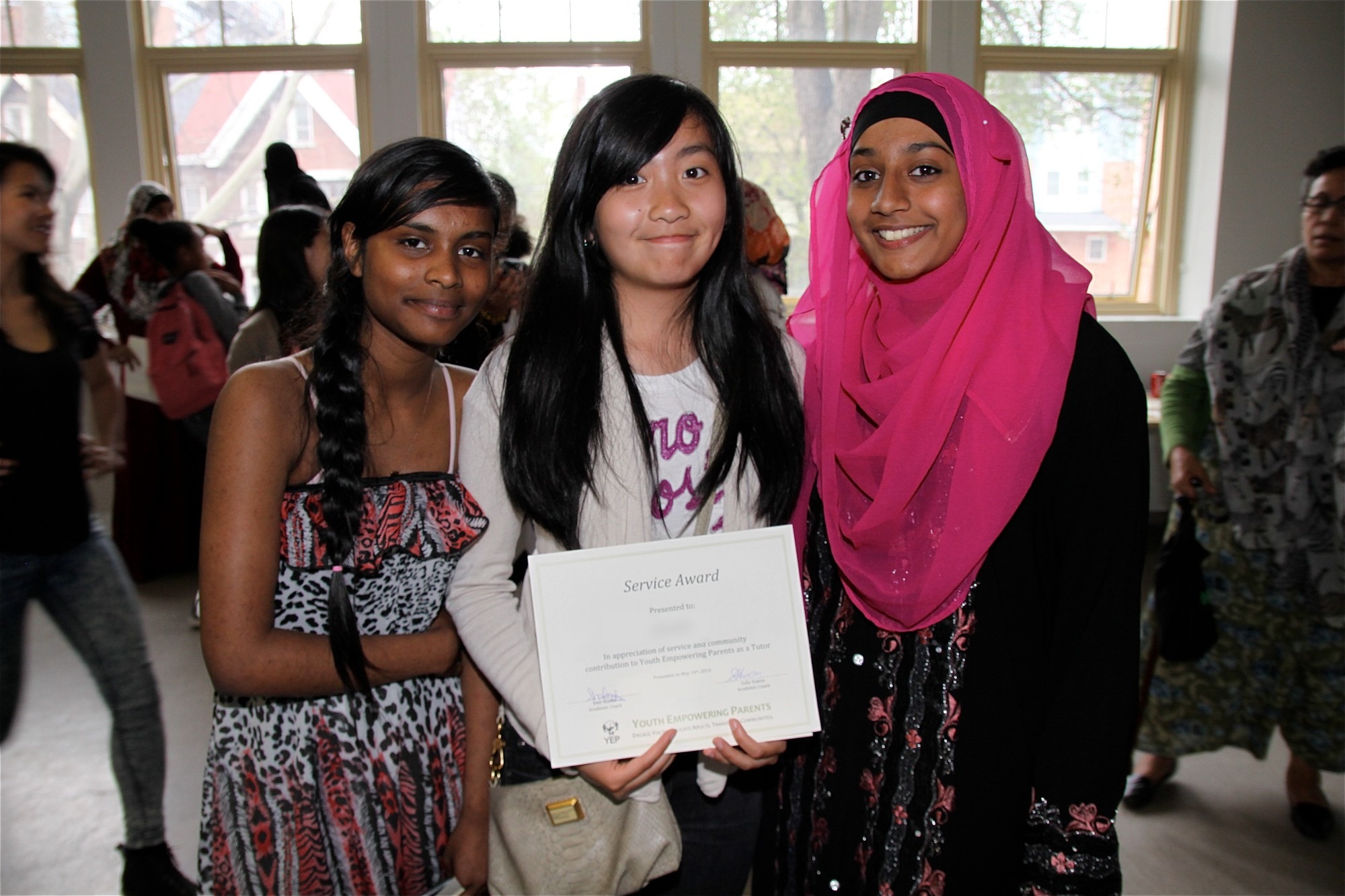
In her own words
“Where I live, people see young people as the problem. We’re always the ones being helped, never the ones helping. At YEP, I’m the one teaching, and the adults in my neighbourhood see me differently now.”
The challenge
In many under-resourced communities, young people are seen as a problem, not a solution. They receive services, but are rarely given the chance to provide them.
At the same time, adults and seniors who don’t speak English or French well can feel shut out of everyday life for years, even with young people right next door who speak their language and know the neighbourhood.
But every community already has what it needs: young people with skills, and adults and seniors who want to learn.
50+languages spoken by the people we serve, from 40+ countries.
How we work
We run our own programs
In schools and community centres in underserved communities across Toronto.
We equip others to run theirs
We train community agencies and youth leaders to run programs their own way, across Canada and in 6 countries: Canada, Spain, Niger, Poland, Ethiopia, and Indonesia.
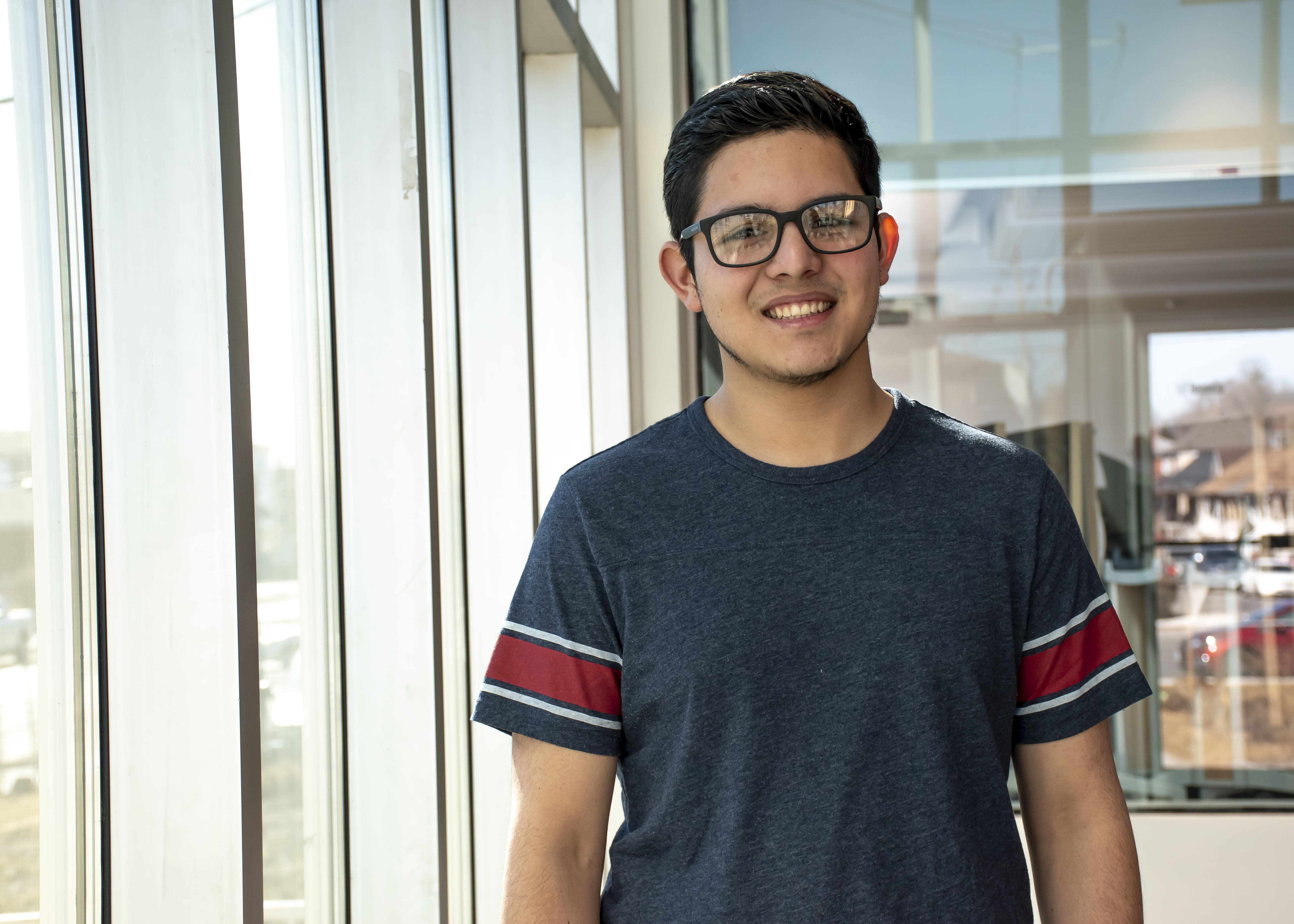
Daniel joined YEP as a youth tutor, not sure he had the patience to teach. YEP trained him to lead, and he went on to run the program in two communities: one in Toronto and one in Etobicoke. Soon after, he became a leader elsewhere in his community: Youth Director at his local nonprofit youth organization.
“YEP helped to increase my leadership skills.”
Read Daniel’s story →Why it works
We create opportunities for young people to provide services, teaching the adults and seniors in their own communities. It’s a low-cost solution that unlocks what’s already there.
And it’s flexible: tailored to each community, and to each person in it. People learn what they want to learn.
- ✓In communities with many immigrants, English as a second language makes a big difference.
- ✓At seniors’ centres, seniors learn technology, and how to avoid financial scams.
- ✓When children are the tutors, those with low confidence get a chance to build it.
- ✓When youth are the tutors, they practice real leadership skills, build meaningful connections, and come to care about their community.
Many programs across Canada are youth-led
Through our National Youth Leaders Program, we train young people to create programs for their own communities, with a grant and coaching.
249
youth leaders trained
113
youth-led programs and events
3,250
people reached
18
cities across Canada
Lasting impacts
By unlocking the skills and goodwill that already exist in a community, YEP makes the whole community stronger, and the value keeps growing.
Social value for every $1 invested
$1
donated
$27
in social value
An independent Social Return on Investment study, with a framework developed by Boston Consulting Group and carried out by Community Seed Consulting, measured the short- and long-term value of our programs for both the youth and the adults and seniors they teach.
See our Social Return on Investment →

The story behind the numbers
Selam and Yordanos
“I’m learning how to teach, and she’s learning things she can use every day to make her life better.”Read more stories →


